Worried about your house when the next storm heads for the coast? Japan typhoon preparedness comes down to knowing your local hazard, securing the building early, and leaving before the alerts turn urgent.
This guide sits within our living in japan section and focuses on homes, including rural and off-grid ones.
| Item | Value |
|---|---|
| Typhoons per year (1951 to 2025 average) | About 26 |
| Typhoons that hit Japan per year | Around 3 |
| Month with the highest risk of severe damage | September |
| Operational “approach” distance used by JMA | Within 300 km |
Figures come from Nippon.com’s typhoon data page and a meteorological journal study. They can change, so check the sources before you rely on them.
How often do typhoons actually hit Japan?
The annual average for 1951 to 2025 was approximately 26 per year, of which around 3 hit Japan, according to Nippon.com. Most form and make landfall from July to September, when ocean temperatures are higher.
September is the month with by far the highest risk of severe damage. If you plan to move into a house in the countryside, treat late summer and early autumn as the months when the property is tested.
A study in the Journal of the Meteorological Society of Japan notes that JMA operationally counts a storm as approaching when its central position is within 300 km. That is a wide circle, so a storm that never makes landfall can still bring heavy rain and wind to you.
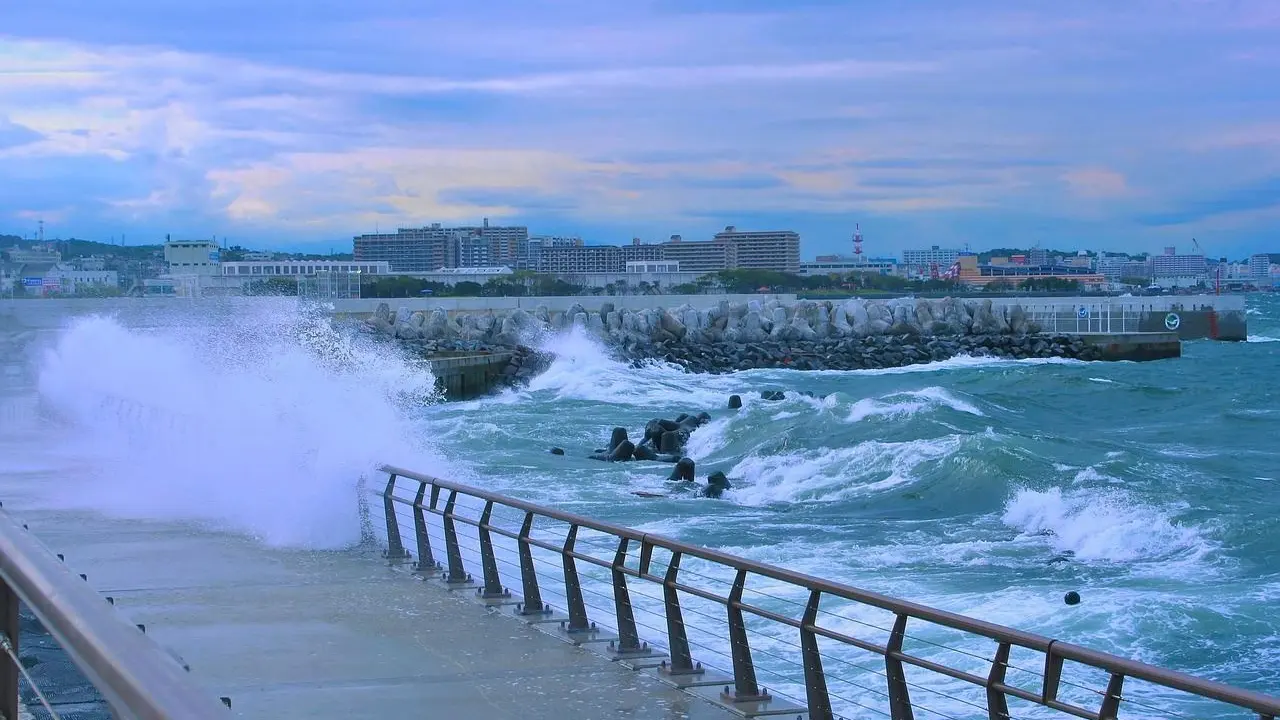
That is why preparation should not hinge on a forecast landfall point. Wind, rain and storm surge reach well beyond the line drawn on the track map, and a rural property with one road in can be cut off even when the eye passes far away.
Risk also varies with where you live. Our guide to japan climate by region explains how exposure differs between the south and the north.
Understand the five-level alert system
Japan groups weather threats into four categories: heavy rain, river flooding, landslides and storm tides. Each is assigned one of five color-coded levels, as Stars and Stripes reported in June 2026.
- Level 3: the elderly and those requiring assistance should be evacuated.
- Level 4: evacuation is required for everyone.
- Level 5: authorities issue an emergency warning indicating a disaster may already be occurring.
The practical lesson is to act early. An emergency warning means a disaster may already be underway, so treat the everyone-evacuates level as your latest departure point (see Nippon.com’s alert explainer). Leaving while roads are still passable is far easier than trying to leave later.
If anyone in your household is elderly, has a disability or needs help moving, Level 3 is your real trigger. Decide this in advance and write it down.
Check the hazard before you commit to a property
Where a house sits matters more than any shutter you can fit.
Before buying, ask three questions:
- Is the plot near a river, a valley mouth or a steep slope?
- Has the site flooded or slipped before, according to neighbours and local records?
- Is there a road out that stays open when the river rises?
Our notes on buying rural land in japan cover the wider purchase process. Treat the hazard-map check as a step you finish before you sign anything.
Secure the house before the storm arrives
Most preparation is ordinary maintenance done ahead of the season. Do it in calm weather, not when the first warning appears.
- Clear gutters, drains and ditches so water can leave the property.
- Check roof tiles, flashing and anything loose on the eaves.
- Close and lock shutters or amado storm panels; tape alone will not stop breakage.
- Bring in or tie down bicycles, planters, laundry poles and garden furniture.
- Move valuables and documents off the floor level if flooding is possible.
After the storm passes, walk the property in daylight and look for fallen branches, damaged roofing and standing water before you go back to normal routines. Stay away from downed power lines, and avoid slopes that look cracked or have started to slide, because landslides can follow heavy rain by hours.
Outbuildings, greenhouses and solar panel mounts deserve special attention.
Build a kit for losing power and water
Storms often cut electricity, water and roads, and rural homes can wait longest for repairs. Start with drinking water, dry or canned food, flashlights, batteries and household medicines, then add the items below. Keep everything in one place that every adult in the house can find in the dark.
Add what suits your own situation:
- A battery or hand-crank radio, since phone networks can fail.
- A charged power bank and a spare cable.
- Prescription medicines, glasses and copies of ID.
- A portable stove with fuel, used outdoors only when conditions are safe.
- Cash in small notes, as card machines need power.
Off-grid households have a head start here, because batteries, stored water and a heat source are often already in place. Test them before the season, and confirm that your system can ride out a blackout without needing a repair visit.
Plan for a long outage and a blocked road
A fallen tree or a washed-out section of road can leave a household cut off.
Talk to neighbours before the season. Agree who checks on whom, who owns a chainsaw or a four-wheel-drive vehicle, and who has an older relative who may need a lift to shelter.
Keep your car fuel tank reasonably full during typhoon season, since pumps need electricity. Park away from trees, rivers and low ground, where water and debris collect.
Make a personal timeline
A personal timeline is a checklist keyed to the hours and days before a storm arrives. Build one for your own household, share it with everyone who lives there, and revisit it each spring before the season starts. Writing it down in advance means you are not making choices in the dark, with wind rising and the power already out.
- When a typhoon forms and heads your way, follow forecasts and check supplies.
- When the forecast firms up, secure the outdoors and charge devices.
- If your area is at risk, move before conditions worsen, not after.
- Once at a shelter or a safe place, stay there until local officials say it is safe to return.
Know your nearest shelter and a second one, and walk the route once in daylight. Your municipal office or its foreign-resident desk can tell you what applies where you live, and this site cannot give you local instructions.
Frequently asked questions
When should I evacuate for a typhoon?
Show answer
Evacuation is required for all at level 4, according to Nippon.com’s June 2026 explainer. Anyone who needs assistance should go at level 3, and you should not wait for level 5.
How many typhoons hit Japan each year?
Show answer
Around 3 hit Japan in an average year, out of roughly 26 that form, based on Nippon.com’s 1951 to 2025 average.
Which month is most dangerous?
Show answer
September, which Nippon.com describes as posing by far the highest risk of severe damage, though storms are possible from late spring through autumn.
Does this site give official emergency advice?
Show answer
No. This is an independent educational site, and your local municipality and the Japan Meteorological Agency are the right places for live warnings.