Planning a cold winter away from the grid? Wood stove heating off grid works well if you pick an efficient stove, burn dry wood and install the flue properly. Here is how to approach it.
| Item | Value |
|---|---|
| Wood heaters made before 1990 | Burn wood less efficiently |
| New wood-burning appliances | Up to 50% more energy efficient |
| Recommended piece size for faster drying | 6 inches in diameter or smaller |
| Wet wood | Can create excessive smoke |
| Open wood-burning fireplace | Generally an inefficient way to heat a home |
These figures come from the EPA’s Burn Wise energy efficiency page, an archived snapshot of the page. They can change, so check the source before you rely on them.
This guide is part of our wider look at off-grid living in japan, where heating is often the biggest winter task.
Why a wood stove suits off-grid heating
A wood stove needs no electricity to run. That matters when your power comes from a small solar array and batteries that you would rather not spend on heating.
Fuel can also be local. If you own or manage woodland, or can buy thinnings from a neighbour, your heat comes from a resource close to home.
There are trade-offs you should weigh honestly:
- You must cut, split, stack and dry the wood well ahead of winter.
- The stove needs daily attention, including loading, ash removal and checking the fire.
- Heat is local to the room unless you plan how it moves through the house.
- A poorly installed flue is a real fire risk.
Choosing an efficient stove
Age matters. The EPA notes that wood heaters manufactured before 1990 burn wood less efficiently, wasting fuel and polluting the air around your home. Its page also says new wood-burning appliances are up to 50% more energy efficient.
That is a US source, so it is a guide rather than a Japanese rule. Still, the lesson holds anywhere: a modern, well-designed stove gives more heat per log than an old one.
The same page says an open fireplace is generally an inefficient way to heat a home. For a house you want to keep warm on limited fuel, a closed stove is the better choice.
Questions to ask before buying
- Is the stove sized for the space you actually need to heat, rather than the biggest model on offer?
- Does it take logs of the length you can realistically produce?
- Can the dealer or maker tell you the required distances to walls and ceilings?
- Is a flat, non-combustible floor area available for it?
Fuel: getting dry wood
Fuel quality decides whether a stove is pleasant or a nuisance. The EPA advises that firewood should be dry, or “seasoned”, because wet wood can create excessive smoke.
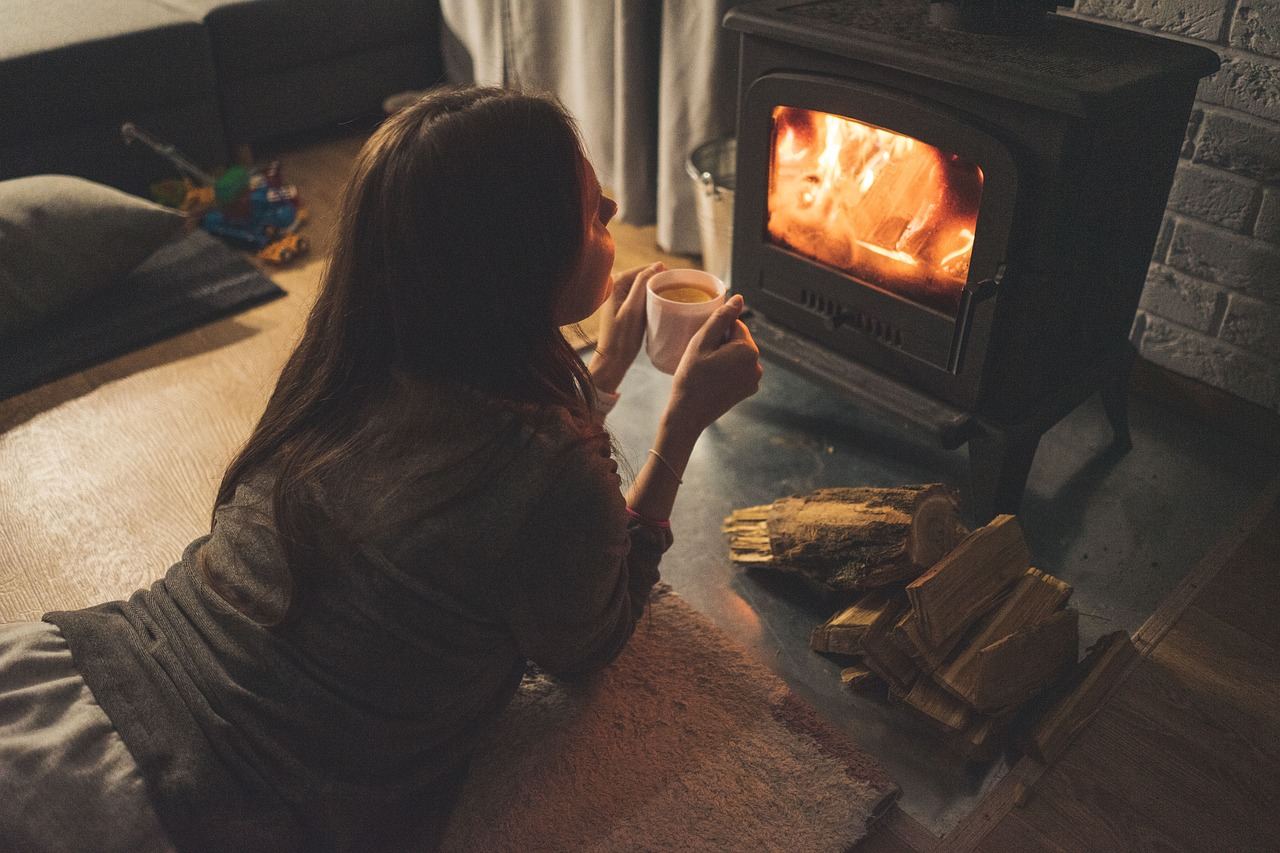
It also suggests splitting wood into pieces 6 inches in diameter or smaller so it dries faster. Smaller, split pieces expose more surface to the air.
A practical seasoning routine looks like this:
- Cut and split the wood as early as you can, ideally in spring.
- Stack it off the ground with gaps for air to pass between the rows.
- Cover the top of the stack but leave the sides open.
- Test pieces before burning: dry wood feels light and sounds hollow when knocked together.
Japan’s humid summers and rainy season make drying slower in many regions, so plan on a generous lead time and keep a spare stack in reserve.
Installation and safety in Japan
Installing a stove is where mistakes become dangerous.
Before you buy or build anything, talk to your local fire department and the building office. They can tell you the distances to combustible surfaces and the flue requirements that apply where you live.
Points to settle in the plan:
- A non-combustible hearth beneath and around the stove.
- Safe clearances to walls and ceilings, using the maker’s instructions and local rules.
- A flue that passes through the wall or roof with proper protection from combustible material.
- A smoke alarm and a carbon monoxide alarm in the living and sleeping areas, ideally battery powered.
- A fire extinguisher within reach.
Hiring a qualified stove installer is usually wiser than doing the flue yourself. This site does not offer installation or consulting services; it simply points out that the flue is the part not to improvise.
Many Japanese homes, especially older farmhouses, have large rooms with gaps and thin walls.
Keep the stove’s location in mind too. A central position lets heat reach more rooms. Where the flue runs through living space, the exposed pipe also gives off useful heat, provided the installer has protected nearby surfaces.
Running the stove day to day
Burn dry wood and give the fire enough air. If smoke persists after you burn dry wood and open the damper to get a full fire going, the EPA page recommends contacting a certified professional for an inspection.
Chimney cleaning is part of the routine. Creosote builds up when fires smoulder, so have the flue checked and swept regularly, particularly after a heavy season.
Handle ash carefully. Put it in a metal container with a lid, kept on a non-combustible surface away from the house, because embers can stay hot for a long time.
Fitting it into the rest of your off-grid setup
Heating rarely stands alone. A stove can warm a kettle and dry laundry, but frozen pipes are a separate concern, so think about how your water supply copes in winter; see our notes on off grid water filtration for the water side.
Long winter evenings by the stove also raise the question of staying connected, which our guide to off grid internet options covers.
Consider a simple plan for the coldest weeks: a stack of dry reserve wood, a second heat source for emergencies and a warm room where everyone can gather if you need to conserve fuel.
Keep a simple winter log of how much wood you burn each week and how cold it was. After a full winter you will know how large a stack you really need, and you can plan next year’s cutting with confidence rather than guesswork.
Frequently asked questions
Can a wood stove heat a whole off-grid house?
Show answer
It can heat a well-insulated, compact home, but heat spreads unevenly. Many people warm the main room and use doors, layout and insulation to manage the rest.
Is a newer stove really worth the cost?
Show answer
The EPA says new wood-burning appliances are up to 50% more energy efficient than older ones, so a modern stove can mean less wood to cut and less smoke.
How dry should firewood be?
Show answer
It should be seasoned. The EPA warns that wet wood can create excessive smoke, and recommends splitting pieces to 6 inches in diameter or smaller so they dry faster.
Do I need permission to install a stove in Japan?
Show answer
Check with your local fire department and building office before installing.