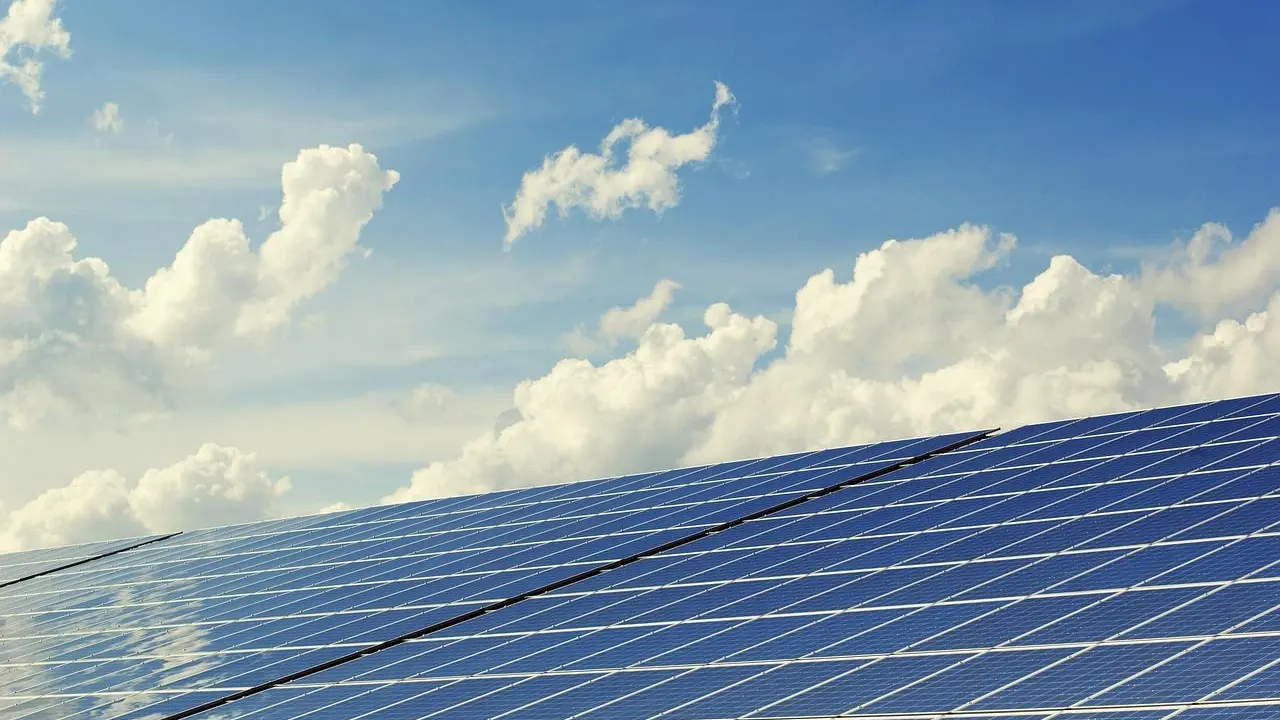
Planning an off grid solar power system for beginners feels huge, but it is four parts: panels, a charge controller, batteries and an inverter. Size them from your daily energy use, then add margin for losses.
| Item | Value |
|---|---|
| Inverter self-consumption | Under 1 watt to around 30 watts |
| Inverter efficiency losses | 5% to 15% |
| Lead-acid maximum depth of discharge (for longer life) | 50% |
| PWM charge controller efficiency | About 79% |
| MPPT charge controller efficiency | About 94% |
These figures come from Unbound Solar’s sizing guide and Renogy’s sizing guide, both retailer pages. Figures can change with products, so check the source before you rely on them.
Anyone planning a home outside the grid, including those weighing off-grid living in japan, can use the same basic method.
The parts of an off grid solar power system
Every simple off-grid setup uses the same chain of equipment. Power flows from the panels, through a controller, into the batteries, and out through an inverter if you run mains-style appliances.
- Solar panels collect the energy and produce DC power.
- Charge controller protects the batteries and regulates what the panels send them.
- Battery bank stores energy for night and cloudy days.
- Inverter converts battery DC into AC for ordinary appliances.
Unbound Solar notes that solar panels and batteries use DC power, and some equipment can be wired directly to the batteries provided it can handle real-world battery voltages. That can save you an inverter if you only run small DC loads such as lights and phone chargers.
Also plan for fuses, breakers, cabling and a safe place to put the batteries. A beginner is wise to have a licensed electrician review the wiring, because rules differ by country and local authority.
Step one: work out what you use
Sizing starts with your daily energy use in watt-hours. List every appliance, its power draw in watts, and the hours you run it each day, then multiply and add them up.
- Write down each device you want to run.
- Multiply its watts by the hours per day it runs.
- Add the results to get a daily total in watt-hours.
- Add the inverter’s own consumption if you use one.
Unbound Solar’s worked example uses a small load of 240Wh/day, which suits a lights-and-electronics cabin. A household with a fridge and a washing machine will need far more.
The cheapest watt is the one you never use. Efficient lighting, a small efficient fridge and gas or wood for heating and cooking shrink the system you must buy. The off grid living cost picture changes a great deal depending on how much you ask the system to do.
Step two: size the battery bank
Batteries are sized from your daily total and your days of autonomy. Unbound Solar defines that as the number of days the equipment must operate on battery power with limited solar power.
The formula the search guides share is simple: daily energy need, multiplied by autonomy days, divided by the depth of discharge you allow. Treat it as a starting point, since guides differ on margins.
Depth of discharge matters most with lead-acid batteries. Unbound Solar says sizing a lead acid battery for a maximum 50% depth of discharge will extend the battery’s life, which means you must buy more nominal capacity than the energy you actually plan to use. That extra capacity is the price of a longer battery life, and it is why many beginners find lead-acid banks larger and heavier than expected.
Inverter losses also feed into this step. The same guide says efficiency losses can be from 5% to 15% depending on the inverter and how much it is loaded, so add that to your daily total before sizing the batteries.
Lead-acid or lithium?
Lead-acid is cheaper to buy but needs more capacity for the same usable energy, because of the depth-of-discharge limit above. Lithium batteries generally allow deeper discharge, though you should confirm the figure in the maker’s datasheet and use a battery management system.
Step three: size the panels for your sunlight
Panel size depends on how many peak sun hours your site gets. Renogy’s example sits in Tennessee, which it says has 4 peak hours, and the same sum applies anywhere once you substitute your own local figure.
Sun varies by region and season in Japan, with cloudier winters on the Sea of Japan side and heavy snow in some areas. Size for your worst month if you live there year-round, not the sunniest one. Government and weather-association irradiation databases publish local monthly values you can look up.
Divide the daily watt-hours you must replace by your peak sun hours to get the array wattage. Then adjust for the controller you choose.
Step four: pick the charge controller and inverter
Charge controllers come in two main types. Renogy says a PWM controller has about 79% efficiency, while an MPPT reaches approximately 94%, and it suggests dividing the array wattage by 0.8 for PWM or 0.94 for MPPT to get a refined wattage.
For anything beyond a very small system, MPPT is usually the better choice because it wastes less of the panel output. Check that its maximum input voltage and current rating suit your array and battery voltage.
For the inverter, size it to your largest simultaneous load, with some headroom for start-up surges from motors and compressors. Unbound Solar says inverters consume a small amount of power while operating, typically ranging from under 1 watt to around 30 watts, so read the spec sheet.
Check that the inverter’s output voltage and frequency match your appliances, especially if you import equipment from abroad.
Common beginner mistakes
- Guessing the load. Measure real appliance use with a plug-in meter instead of trusting labels.
- Ignoring winter. A system that works in summer can fail in the shortest, cloudiest months.
- Mismatched voltage. Batteries, controller and inverter must share a system voltage.
- Undersized wiring. Thin cable overheats and wastes power; use a wire-size and voltage-drop calculator.
Water is the other utility a remote home must solve, and the same planning habits apply. See how to collect rainwater for drinking for that side of self-reliance.
Frequently asked questions
Can a beginner build an off-grid solar system alone?
Show answer
Small DC systems for lights and chargers are a common first project. Larger systems with high-voltage arrays and big batteries carry fire and shock risks, so have a qualified electrician check them and follow local rules.
Should I choose MPPT or PWM?
Show answer
Renogy puts MPPT at approximately 94% efficiency against about 79% for PWM.
How many days of battery autonomy do I need?
Show answer
It depends on how long cloudy spells last where you live and on whether you have a backup generator. Choose the number from your local weather records, then size the battery bank from it.
Do I need an inverter?
Show answer
Only if you run AC appliances. Some DC equipment can be wired directly to the batteries provided it can handle real-world battery voltages, which avoids inverter losses of 5% to 15% according to Unbound Solar.