Wondering how to collect rainwater for drinking without getting sick? Catch it clean, store it dark and sealed, then treat it every time: filter, then disinfect or boil.
This guide is part of our look at off-grid living in japan, where rain is often the nearest water source.
| Item | Value |
|---|---|
| Boiling time once water reaches a rolling boil | 1 minute |
| Filter absolute pore size with high effectiveness against Giardia and Cryptosporidium | ≤1 micron (NSF Standard 53 or 58) |
| Filter absolute pore size with moderate effectiveness against bacteria | ≤0.3 microns |
| Filtration followed by disinfection | Very high effectiveness against all microorganisms |
| Chlorine and iodine against Cryptosporidium | Not effective |
These figures come from the Minnesota Department of Health guidance on treating untreated water. Guidance can change, so check the source before you rely on the numbers.
Why rainwater needs treatment before you drink it
Rain itself falls fairly clean. The trouble starts when it lands on a roof, runs through gutters and sits in a tank, picking up bird droppings, leaves, dust and whatever your roofing material sheds.
That is why treatment is not optional for drinking. Clear water can still carry microorganisms such as Giardia and Cryptosporidium, and a bucket-and-ladle approach to storage invites more.
Treat the system as a chain. Every link, from roof to cup, either keeps contamination out or removes it:
- A clean catchment surface and gutters.
- Screening and diverting the dirtiest water away from the tank.
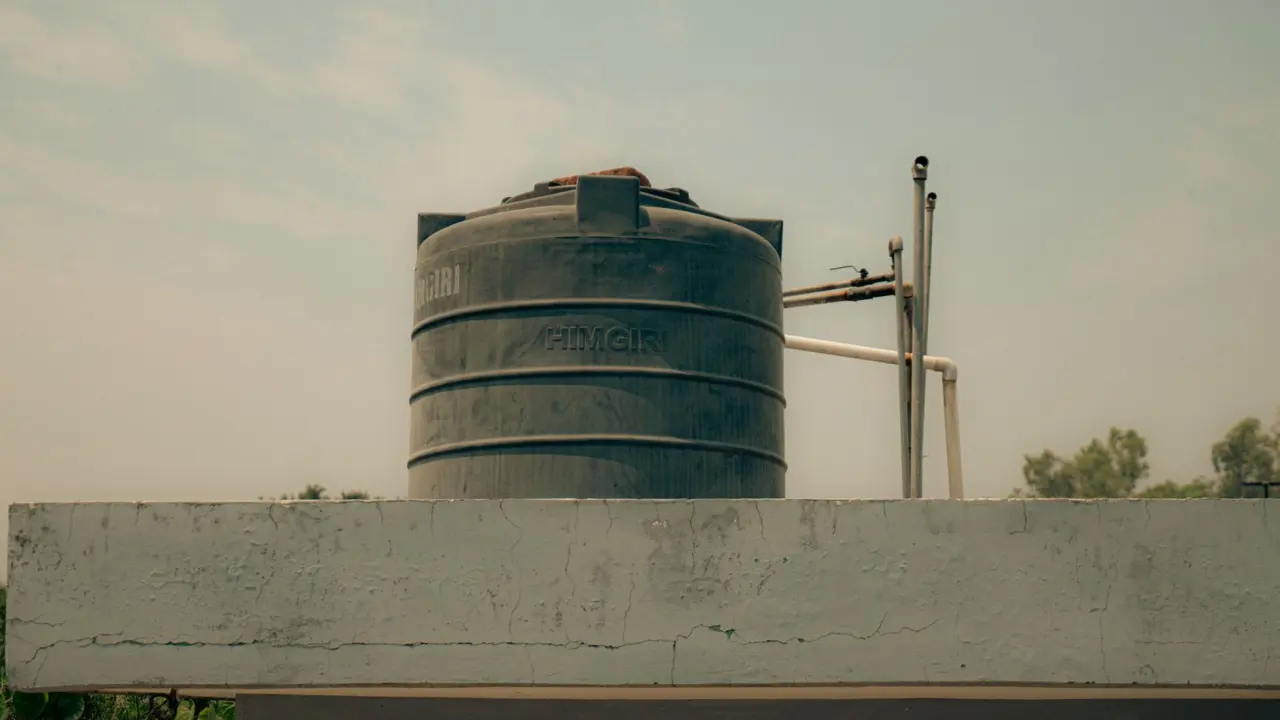
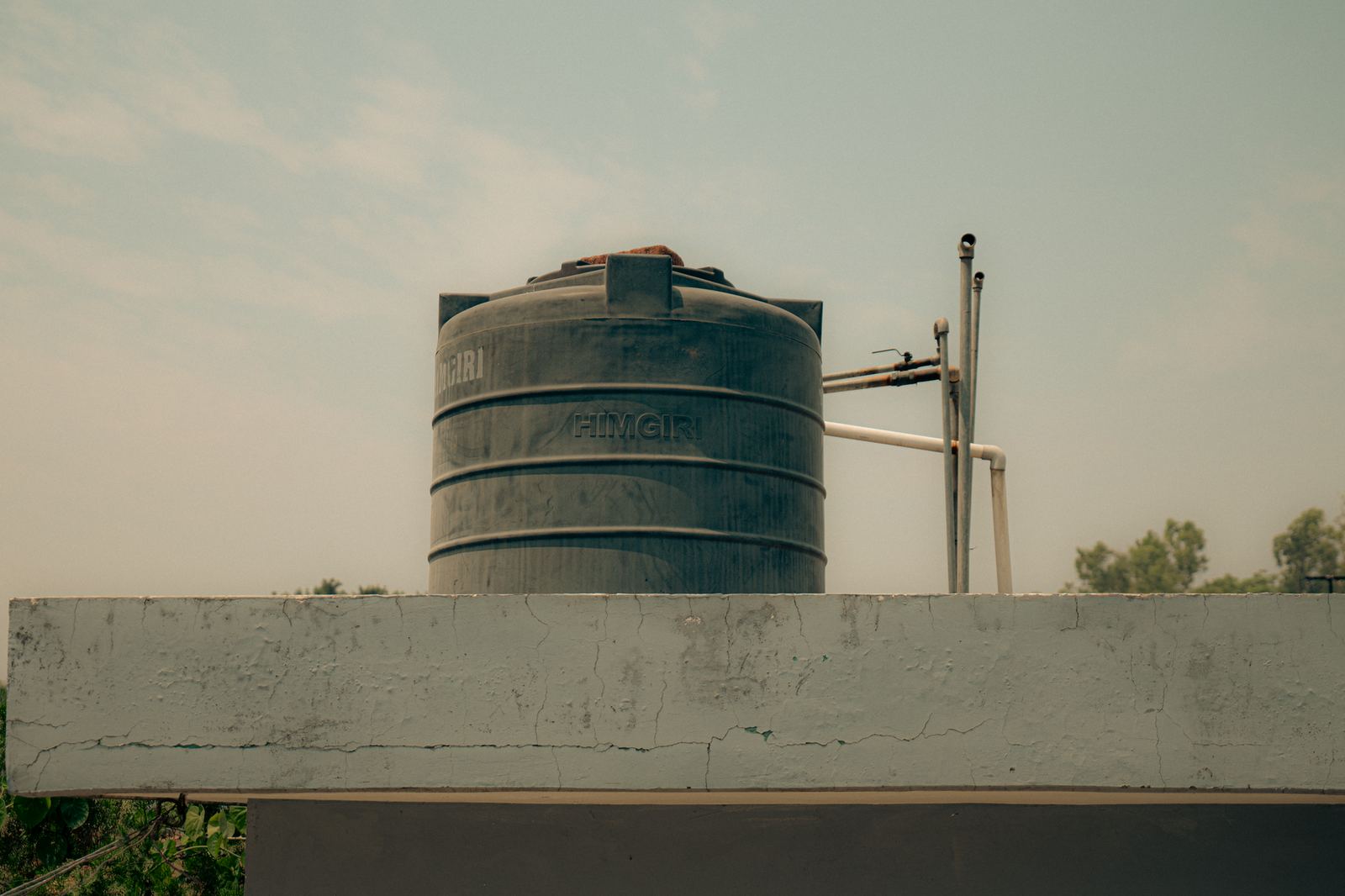
- A sealed, dark, food-safe tank.
- Filtration, then disinfection or boiling at the point of use.
Choosing and keeping a safe catchment surface
Your roof is the first filter, so its material matters.
Be wary of roofs with old paint, moss treatments, asphalt shingles, or any surface you cannot identify. If you are renting or buying a house, ask what the roof is made of before you plumb it into a drinking supply.
Keep the roof and gutters tidy
- Trim branches that overhang the roof so fewer leaves and bird droppings land on it.
- Fit coarse gutter guards or mesh to stop leaf litter reaching the downpipe.
- Clean the gutters before each rainy season, and after storms or long dry spells.
- Avoid collecting from areas where you burn wood or trash nearby, as soot settles on the roof.
Chemicals are the part you cannot see or boil away. Boiling kills microorganisms but does not remove metals or other chemical pollutants, so material choices upstream do the real work.
First flush diverters and pre-filtering
The first rain after a dry spell washes a roof clean, and all that grime should not reach the tank. A first flush diverter sends the opening part of each rainfall to a side chamber or to waste before the rest flows on to storage.
Diverters need upkeep.
Add a fine screen at the tank inlet as well. Together, the diverter and screen cut the load that your later filter has to handle, and a filter lasts much longer when it does not face muddy water.
Storing rainwater safely
Storage is where good water goes bad. Light grows algae, warmth speeds bacteria, and any gap lets in mosquitoes, rodents and dust.
- Choose a tank made of food-safe material, intended for drinking water, not an old chemical drum.
- Keep it opaque and fully covered, with the inlet screened and the overflow fitted with a mesh to keep insects out.
- Draw water from a tap or a pipe set above the sediment layer, rather than dipping a container in.
- Inspect it regularly, and drain and scrub it when sludge builds up.
Keep the rainwater plumbing separate from any mains supply. Mixing the two can contaminate the safe water, so use a dedicated tap and label it clearly.
If you are also planning power for pumps or UV units, our beginner explainer on an off grid solar power system for beginners covers how to size a small system.
How to treat rainwater so it is safe to drink
Good treatment layers methods. The Minnesota Department of Health says that filtration followed by disinfection has very high effectiveness in removing all microorganisms from water.
Boiling
Boiling is the simplest fallback. Bring the water to a rolling boil and continue for 1 minute, per the same Minnesota guidance, and let cloudy water settle first so you pour off the clear water from the top.
Filtering
Pore size matters. Filters with an absolute pore size of 1 micron or smaller, certified to NSF Standard 53 or 58, are highly effective against Giardia and Cryptosporidium, while filters with an absolute pore size of 0.3 microns or smaller are moderately effective against bacteria.
Viruses are smaller still. Only filters containing a chemical disinfectant matrix are effective against some viruses, so a filter alone is not enough.
Filters also fail quietly. Poor maintenance, or not replacing the cartridge as the manufacturer recommends, can cause a filter to fail.
Disinfecting
Chemical disinfection depends on contact time, concentration, temperature, turbidity and pH. Chlorine and iodine are not effective against Cryptosporidium, which is a reason to filter first rather than rely on chemicals alone.
Routine checks, testing and local rules
A system you never inspect will eventually fail. Build a simple routine and write it down.
- After heavy storms: check the diverter, screens and gutters.
- Each season: inspect the tank lid, vents and overflow, and look for sludge.
- On schedule: replace filter cartridges and UV lamps as the maker advises.
- If the taste, smell or colour changes, stop drinking it and investigate.
Get the water tested by a qualified laboratory. Your own senses cannot detect bacteria or dissolved metals.
Rules on private water supplies differ by country and by municipality, so ask your local office before you build. If you are managing waste too, our guide to composting toilet how it works shows how to cut your total water demand, which makes a rain-fed supply easier to size.
Many households use rainwater for the garden, laundry and flushing, and keep a treated supply only for drinking and cooking. That split reduces the volume you must treat, and it is a sensible place to start.
Frequently asked questions
Can you drink rainwater straight from the sky?
Show answer
Rain caught in a clean open container is cleaner than roof runoff, but it can still carry germs and airborne pollution. Treating it by filtering and disinfecting or boiling is the safer habit.
Is boiling enough to make rainwater safe?
Show answer
Boiling for 1 minute at a rolling boil deals with microorganisms, but it does not remove chemical pollutants such as metals from roofing or pipes. That is why material choices and filtration still matter.
Does a first flush diverter replace a filter?
Show answer
No. The diverter keeps the dirtiest runoff out of the tank, while a filter and disinfection step handle what remains. Use them together.
How often should I test my stored rainwater?
Show answer
A qualified laboratory can advise on a sensible schedule for your set-up.