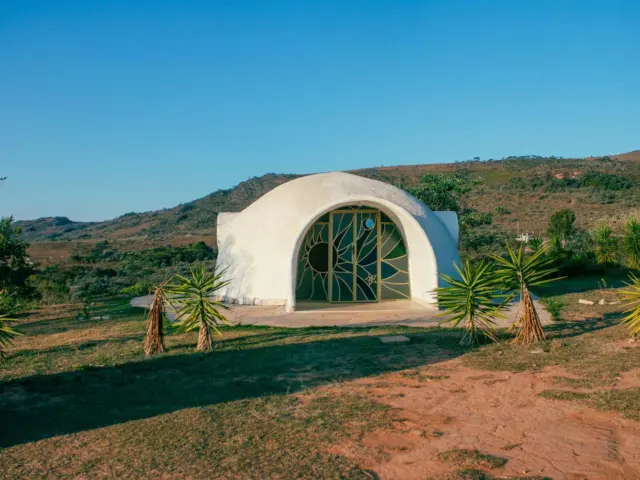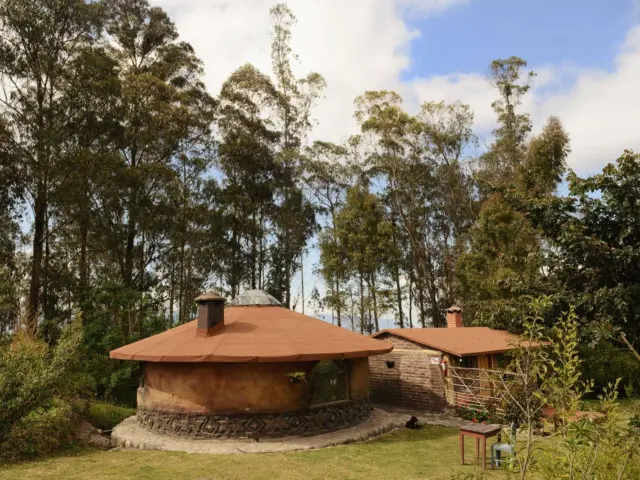
Wondering whether an earthship in cold climates can keep you warm through a hard winter? Possibly, but the evidence is thin. Dense walls and south-facing glass help, yet cold sites likely need extra insulation and a backup heat source.
| Item | Value |
|---|---|
| Design principles behind an Earthship | Six |
| Indoor temperature the design aims for | Close to 70 °F (21 °C) |
| Brighton, UK thermal study | Published 2009, initial findings only |
| Earthships built worldwide (Brighton paper estimate) | Up to 3000 |
| Earthships built in the UK at that time | Two |
Figures come from Wikipedia’s Earthship entry and a 2009 Brighton Earthship paper abstract. They can change, so check the sources before you rely on them.
How an Earthship is meant to stay warm
An Earthship is a passive solar, earth-sheltered house. It is built from natural and upcycled materials such as earth-packed tires, and it is designed to heat and cool itself without burning fuel for temperature control.
The heating idea is simple. Glass on the sun-facing side lets in low winter light, and heavy walls and floors soak up that heat and release it slowly. Wikipedia lists six design principles, one of which is thermal or solar heating and cooling.
The same entry says Earthships are designed to stay close to 70 °F (21 °C) whatever the weather outside. Treat that as a design goal, not a guarantee. It is a general claim about the concept, and the entry’s history section notes it cites no sources.
What the evidence says about an earthship in cold climates
Hard measurements are scarce. Much of what circulates comes from owners, builders and news stories about single houses, not controlled monitoring.
One studied case is the Brighton Earthship in the UK. Its 2009 paper reports that the earth-rammed thermal mass showed effective charging and discharging that appeared to moderate extreme outside temperatures. The authors describe these as initial findings from a long-term study, so they are not a final verdict.
The paper describes the thermal store as a seasonal heat buffer. It absorbs heat in summer and releases it in winter to steady the room temperature. That is the mechanism that matters most when you are weighing a cold-climate build.
- Supportive: monitoring in Brighton found that the mass appeared to moderate outside swings.
- Cautious: those results were early and from a single building in the UK.
- Missing: the sources reviewed here include no multi-year data from occupied Earthships in very cold, cloudy regions.
Why cloud, humidity and snow change the picture
The design leans on winter sun. A site with many overcast weeks gives the walls less heat to store, so the buffer can run down.
The Brighton paper notes the thermal store acts as a seasonal buffer, which means it depends on being charged in warmer months. A short, dull summer charges it less.
None of this makes the idea unworkable. It means the original desert-oriented recipe should not be copied unchanged into a snowy valley.
Adjustments people consider for cold regions
These are general building-science choices, not findings from the sources above. Weigh them with a local designer or engineer.
- Add insulation around the buried mass so stored heat is not lost to cold ground and frost.
- Orient the glass toward the winter sun and check that nearby hills, trees or buildings do not shade it in December.
- Plan a backup heater, such as a wood stove, for long dark spells.
- Manage moisture with ventilation, since heavy earthen walls hold dampness in humid climates.
- Test the design with energy modelling for your own weather before you commit money.
If you live in a snowy part of Japan, the same logic applies: compare local sunshine hours and ground conditions first.
How to read owner stories and claims
Online accounts of cosy Earthships through a bitter winter are easy to find. They are worth reading, but they are not the same as data.
Ask a few questions of any story before you lean on it:
- Who is telling it? A builder or seller has a reason to be upbeat, while a long-term resident may be more candid.
- How long was the stay? A visit of a few days says little about a full winter, when the mass has had time to cool right down.
- Was a heater running? Many accounts leave out whether a stove or electric heat was used on the coldest nights.
- What was the weather? A sunny cold snap is far kinder to a solar design than weeks of grey cloud.
The same caution applies to the general claim that these houses hold a steady temperature. Wikipedia’s entry states it plainly, but it is a description of the design intent. A single thorough study of an occupied house in your own kind of weather would be worth far more than any number of testimonials.
Is an earthship a good fit for your site?
Start with the land, not the house. Sun, soil, drainage and the length of the cold season decide whether a mass-heavy design can pay off.
A sloping south-facing plot with free-draining ground gives the design its best chance. A shaded hollow where cold air and meltwater collect is the opposite, and it would stress the buried walls the most.
Think about running costs too. If a backup stove is still needed for long stretches, you lose part of the appeal of heating without fuel, though you may still use far less than in a leaky conventional house. Only modelling and local monitoring data can tell you how much less.
Finally, be honest about the build itself. Tamping earth into tires is heavy, slow work, and a short building season in a cold region makes it harder to finish the roof and glazing before winter arrives.
A sensible way to test the idea
Before committing, compare your site with the cases above. Note how many sunny days you get in midwinter, how deep the ground freezes, and how humid the air is indoors during the cold months.
Then visit a finished building in a similar climate if you can, ideally in winter and ideally speaking with a long-term resident. That single visit will tell you more about comfort, condensation and heating habits than any brochure.
Rules, costs and comparisons to check first
A cold site adds paperwork as well as physics. Frost depth, snow load and insulation requirements all shape what an inspector will accept, so read up on earthship building codes before you buy land.
It also helps to see how the design stacks up against a conventional house. The guide to earthship vs traditional home covers that comparison, and the wider earthship building overview explains the basics.
The Brighton paper also mentions that planning approval was granted in April 2007 for sixteen domestic Earthships on the seafront. Large projects can involve a long approval process.
Frequently asked questions
Can an Earthship work in a cold climate without any heater?
Show answer
The sources reviewed here do not show that. The design aims to stay near 70 °F (21 °C) without fuel, but the evidence for very cold sites is mostly anecdotal, so plan for backup heat.
Has anyone measured an Earthship’s temperatures?
Show answer
Yes. A 2009 study of the Brighton Earthship in the UK monitored its thermal store and found it appeared to moderate extreme outside temperatures. It reported initial findings, not a final result.
Do Earthships need sun to stay warm?
Show answer
Yes. The design relies on solar gain stored in heavy walls and floors, so shaded or persistently cloudy sites will perform worse.
Is the 70 °F claim proven?
Show answer
It is a design aim described in a general encyclopedia entry, and the entry’s history section says it cites no sources.